Understanding Lottery Odds in South Africa
Lottery odds describe the probability of matching a particular set of numbers in a random draw. They can help you understand the game, but they cannot predict which numbers will appear next or turn a ticket into an investment.
What lottery odds mean
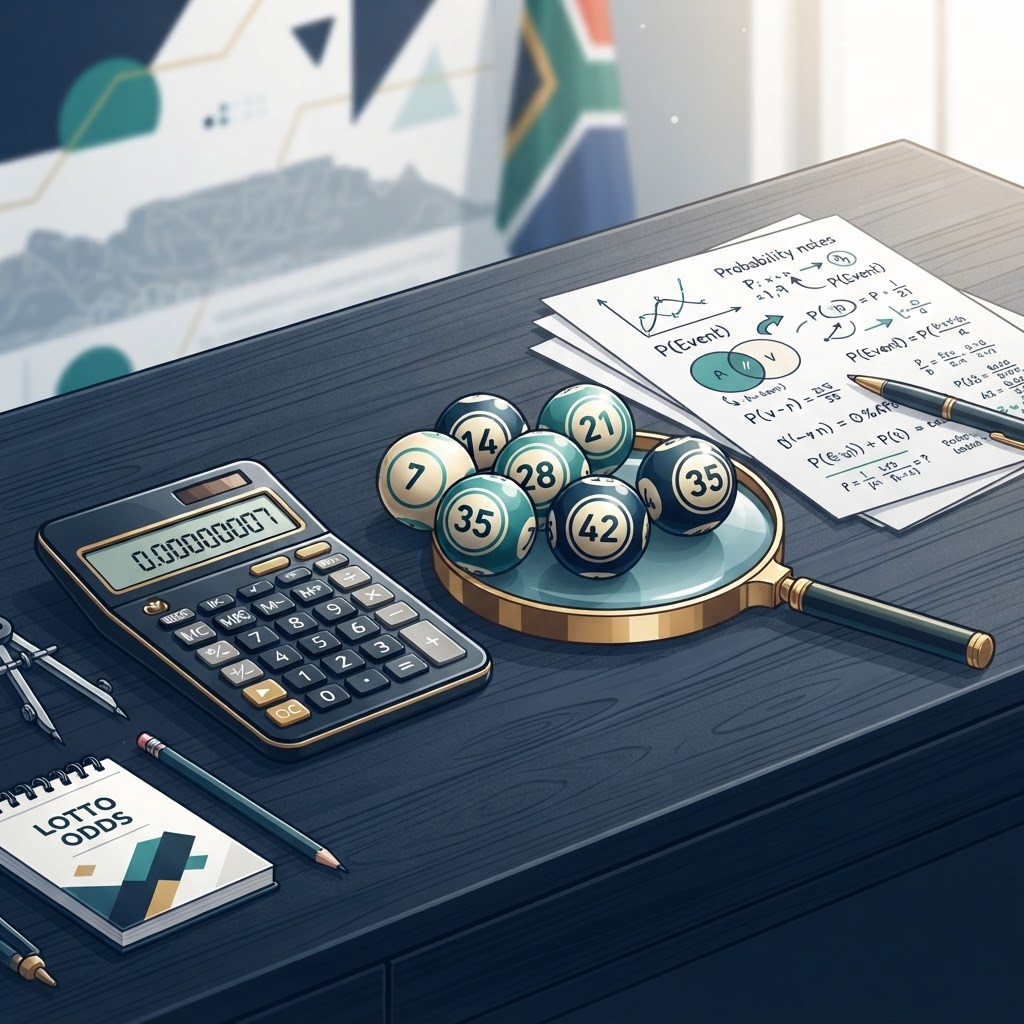
Odds show how many possible outcomes exist compared with the outcome you want. Jackpot odds are usually written as one chance in a very large number because a player must match every required number.
Lower prize divisions generally have better odds because they require fewer matches. The exact probabilities differ between Lotto, PowerBall and their additional draws, so consult the current official game rules for confirmed figures.
- A smaller one-in number means a more likely outcome.
- Jackpot odds are different from the odds of winning any prize.
- Advertised jackpot size does not change the probability of a valid combination.
Why every valid combination has the same chance
Random draws do not favour patterns
In a fair random draw, 1-2-3-4-5-6 has the same chance as any less familiar valid sequence. Human beings notice patterns, but the machine does not assign meaning to birthdays, diagonals, hot numbers or previous results.
- Quick Pick and self-selected entries have equal mathematical odds.
- A number drawn last week is neither due nor disqualified this week.
- Past frequency does not change the probability of the next independent draw.
Quick comparison
- Concept
- Jackpot odds
- What it means
- Chance of matching all required numbers
- What it does not mean
- Chance of winning any prize
- Concept
- Past frequency
- What it means
- A record of previous draws
- What it does not mean
- A forecast of the next draw
- Concept
- More boards
- What it means
- More combinations purchased
- What it does not mean
- A guaranteed return
- Concept
- Quick Pick
- What it means
- Random number selection
- What it does not mean
- Better or worse odds
| Concept | What it means | What it does not mean |
|---|---|---|
| Jackpot odds | Chance of matching all required numbers | Chance of winning any prize |
| Past frequency | A record of previous draws | A forecast of the next draw |
| More boards | More combinations purchased | A guaranteed return |
| Quick Pick | Random number selection | Better or worse odds |
How the number format affects odds
Games with different selection rules create different totals of possible combinations. Lotto asks for six numbers from one pool, while PowerBall combines five main numbers with a separate PowerBall pool. That extra pool changes the calculation.
- More possible combinations generally mean longer jackpot odds.
- Separate ball pools must be included in the probability calculation.
- Prize tiers have their own matching requirements and odds.
Buying more boards
Each additional unique board adds one more possible winning combination, but it also increases the total cost. Even several entries leave the jackpot probability extremely low, and duplicate boards do not create a new number combination.
- Set the total spend before choosing boards or add-ons.
- Never borrow money to increase the number of entries.
- Judge the purchase as entertainment with a likely cost, not expected income.
Frequently asked questions
Do hot numbers have better odds?
No. In an independent random draw, a number's past frequency does not make it more likely to appear next.
Does choosing uncommon numbers improve my chance of winning?
No valid combination is more likely to be drawn. Less common selections could only affect whether a prize is shared if that combination wins.
Are the odds the same for Lotto and PowerBall?
No. Their number formats and prize divisions differ, so consult the latest official rules for each game's exact odds.
Conclusion
Use odds to understand risk rather than to search for a winning pattern. Every valid combination remains random, and a fixed affordable entertainment budget is the most useful limit you can apply.